Tuesday, September 30, 2014

Game Idea Number 1: Four Nights In Paris

I've decided that I'm going to start posting some game ideas that have been kicking around my head for the past few weeks.  These aren't going to full detailed design documents, just ideas.  They're mostly going to be based on aesthetic concepts, like a setting or an idea I want to explore.

Four Nights in Paris
The year is 1913, and the world of aristocrats is a turmoil of political intrigue.  It's a time where old powers are waning and new powers are building.  Upstarts from every nation are grabbing at any opportunity to get ahead, even if it means someone has to end up dead.  While many of these elites are fine with rivalry and good-natured political competition, some rely on good old fashioned assassination to deal with problem players in this political game.

You play as an assassin hired to kill a person who will spending four nights in Paris, the catch is that you don't know who your target is.  Your mysterious employer doesn't want to give any names in fear of getting caught, so they have only given you their location.  Your employee has hired other assassins to try and maximize success, but your employer will only pay the one who kills the target first.  Your target has figured out that they might be assassinated, but doesn't want to give up their vacation.  They only get four days off a year and damn it, they're going to spend it in Paris.  So the target will actively mislead the assassins in hopes of getting them to kill each other.

This game takes a lot from the game Wolf, but as a board game.  It takes the aspect of figuring out who the werewolf/target is while they mislead the others.  The game is meant for 2-6 players with one being the Target.  The other players are given a class of Assassin, each with their own abilities and win condition (that I haven't figured out yet).  They include but are not limited to: The Marksman, the Spy, the Anarchist, and the Double  (those are the only classes I have so far).  It's a game of assassination, with the winner being the one to pull the trigger.


Friday, September 26, 2014

Aesthetics of Play


I used to think that aesthetics as they relate to games, were purely what the senses could pick up.  Essentially the the visual and sound design.  But now I realize that the term aesthetic is far more expansive, and far more abstract.

I'd say it's the other way around for game designers too, as mechanics and dynamics are serving a core aesthetic


There are eight sub categories of aesthetics.  They are: Sense Pleasure, Narrative, Discovery, Abnegation, Fantasy, Challenge, Fellowship, Competition and Expression.  The lines between the eight can blur into each other.  Take for example any of the Saints Row games.  When you're out in the city indulging in ultra violent fantasies upon the innocent town's folk, are you living out a fantasy as a kill crazy maniac , or are you expressing yourself through violence?  Probably a mix of all three, with a little sense pleasure thrown in.


Tuesday, September 23, 2014

2 More Internet Game Design Shows You Should Check Out

As soon as I published the last list of internet personalities, two more similar shows came to mind.  Along with the last three, I HIGHLY recommend watching these guys.

Satchbag


He takes a single game and analyzes it in what he calls a case study.  Usually taking three to four aspects of the game; be it mechanics, systemics or aesthetics, and delving deep into their meaning.  He often compares and them to other works of fiction, classic philosophical ideas, and even cultural movements.  Plus the background music is fucking amazing.

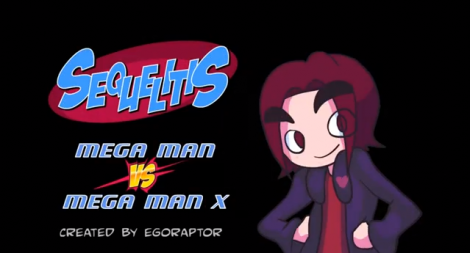
Sequelitis


From famous animator, Egoraptor, come in Sequelitis.  This show is specifically dedicated to comparing one game to another in its series.  Watch it to see how games improve upon the pieces they set up in in their predecessors.

Monday, September 22, 2014

Internet Video Game Shows You Should Check Out

If you're really into game design, or in my Game Design class, I HIGHLY recommend you watch these internet series in tandem with Extra Credits.  These guys beat anything you're going to find on IGN or Kotaku.

Errant Signal
This is probably one of the most in-depth series on game design I've ever seen.  He takes games of all kinds and really analyzes what their mechanics and aesthetics mean, and how they resonate with the player.  Recently, he's taken older 90's PC games and picked apart the mechanics that influeced its successive games and it influence on the culture of games.


Super Bunnyhop
He takes a very similar approach Errant Signal when reviewing games, but he's recently been doing a lo of videos on video game culture.  Cons, shows, cosplay, game journalism; he beautifully illustrates the connection of culture influencing games and vice versa.


Zero Punctuation
By far the most famous (and infamous) person on this list has to be Ben "Yahtzee" Croshaw.  He will shit all over your favorite game in the world, but he'll have a point.  He's a very harsh critic, but all of his criticisms are perfectly valid.  A lot of people don't like his style or humor, and that's fine, but I do think he gives us sobering look into our favorite games.  By the way, this is where the joke PC Gaming Master Race started.


Seriously, I can't recommend these guys enough.

Thursday, September 18, 2014

Mechanics and Dynamics

Today in Intro to Game Design, we discussed what dynamics are and how they differentiate between mechanics.  It's sort of a blurry line between the two, but the line is still there.  I have found myself defining and explaining mechanics using dynamics, such as defining the mechanic of in-game currency by giving the dynamic of what the player can do with the money. 
I think a good way of explaining the difference between mechanics and dynamics is that mechanics are a sort of set rules or general outline, while dynamics are how the player interacts with those rules.


An example of this our group discussed was chess.  A mechanic would be that the bishop can only move in a straight diagonal line.  The dynamic is where the in this diagonal line the player wants to move their bishop.  Do they want to take another piece or just move it into position.  Essentially, the player is using the rules of how the pieces move to plan a strategy.